

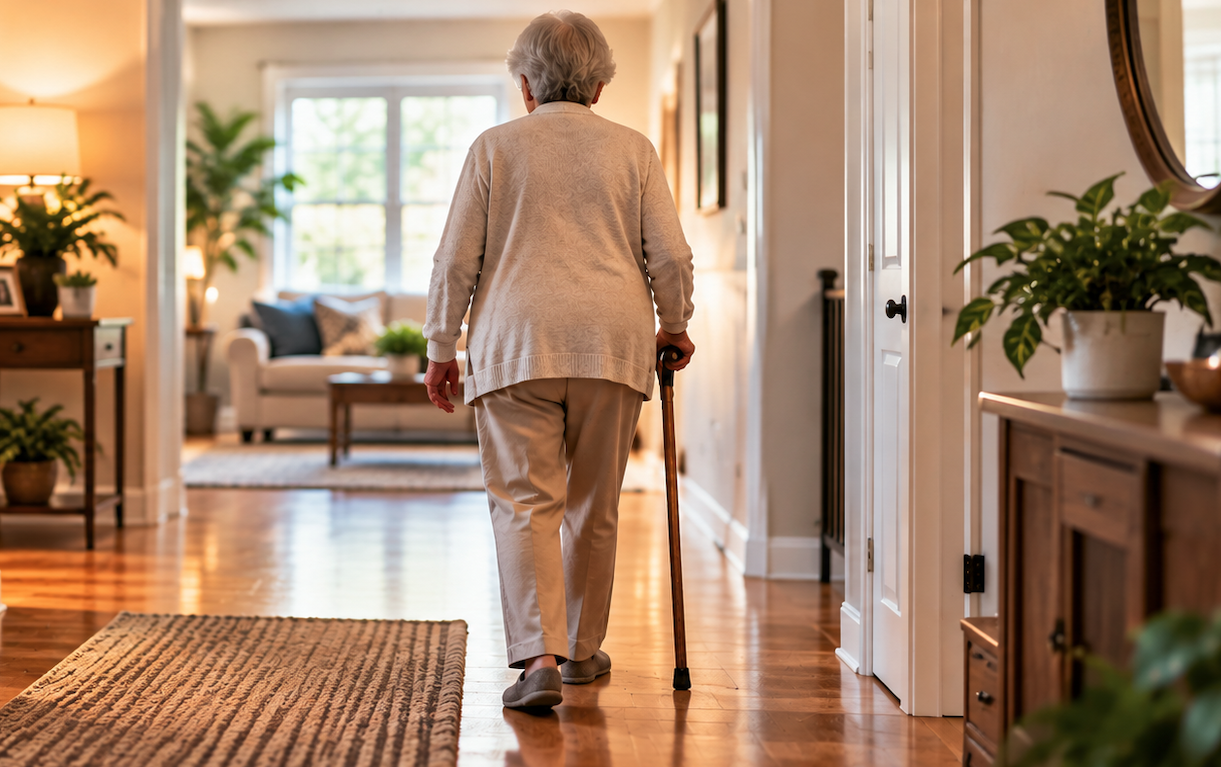
Falls are one of the most common safety concerns for older adults, especially at home. While obvious risks such as loose rugs or cluttered walkways often get attention, many fall hazards are surprisingly easy to miss.
Small changes in vision, balance, strength, mobility, or reaction time can make everyday household features more difficult to navigate. Identifying less obvious risks can help families create a safer and more comfortable environment for aging loved ones.
Here are five fall hazards you may be overlooking in a senior’s home.
1. Poor Lighting in Hallways and Transitional Areas
A home may appear well lit during the day but become much harder to navigate in the evening or at night.
Dim hallways, staircases, entryways, and paths between the bedroom and bathroom can make it difficult for seniors to notice objects, changes in flooring, or steps. Glare and strong shadows may also affect depth perception.
Consider adding brighter lighting in frequently used areas and placing nightlights along nighttime walking routes. Motion-activated lights can be especially useful because they eliminate the need to search for a light switch in the dark.
It is also important to check whether light switches are easy to reach from entrances and whether burned-out bulbs are replaced promptly.
2. Furniture That Is Too Low or Unstable
Chairs, sofas, beds, and other furniture can become unexpected fall hazards.
Very low seating may require significant leg strength and balance to stand up safely. Lightweight chairs may slide or tip when someone uses them for support.
Take a closer look at the furniture your loved one uses most often. Chairs should ideally be stable, supportive, and easy to get in and out of. Armrests can provide additional support when standing.
Frequently used items should also be arranged so seniors do not have to reach across furniture or walk through tight spaces.
3. Bathroom Features That Become Slippery When Wet
Bathrooms are often recognized as high-risk areas, but some hazards may not be obvious until the floor or shower becomes wet.
Smooth tile, slippery bath mats, unstable towel racks, and high bathtub edges can all increase the risk of losing balance.
Non-slip flooring or adhesive strips can help improve traction in tubs and showers. Secure grab bars near the toilet and bathing area may provide additional support.
It is important to remember that towel racks are not designed to support body weight and should not be used as substitutes for properly installed grab bars.
Keeping frequently used toiletries within easy reach can also reduce unnecessary bending, stretching, or turning.
4. Changes in Floor Height
Even small changes in floor level can create tripping hazards.
Thresholds between rooms, uneven flooring, raised carpet edges, or transitions from hardwood to tile may be difficult to notice, especially for someone with reduced vision or mobility.
Walk through the home and pay attention to every transition between rooms. Look for raised edges, loose flooring, or areas where someone might catch a shoe or mobility aid.
High-contrast markings may help make steps or level changes easier to see. Damaged flooring should be repaired whenever possible.
Stairways deserve particular attention. Secure handrails, clear steps, and adequate lighting can make stairs safer and easier to navigate.
5. Frequently Used Items Stored Too High or Too Low
Storage habits can also contribute to falls.
When everyday items are placed on high shelves, seniors may be tempted to use stools or chairs to reach them. Items stored close to the floor can require bending or crouching, which may affect balance.
Move frequently used household items to comfortable, easy-to-reach locations.
In the kitchen, commonly used dishes, cookware, and food items can be stored between waist and shoulder height. The same principle can be applied to bathroom supplies, clothing, medications, and cleaning products.
Reducing the need to climb, stretch, or bend can make everyday activities safer and more convenient.
Small Changes Can Make a Meaningful Difference
Creating a safer home for an older adult does not always require major renovations. Sometimes, the most effective improvements are simple adjustments such as improving lighting, rearranging furniture, securing flooring, or moving commonly used items.
Families and caregivers can periodically walk through the home and look at each room from the senior’s perspective. Consider how easy it is to move around, reach essential items, use the bathroom, and navigate the home at night.
It can also be helpful to involve the senior in the process. Asking where they feel unsteady or uncomfortable may reveal risks that are not immediately visible to others.
Creating a Safer Home Environment for Seniors
Fall prevention is about more than removing obvious obstacles. It involves creating an environment that supports mobility, independence, and confidence.
By paying attention to overlooked hazards such as poor lighting, unstable furniture, slippery bathroom surfaces, uneven flooring, and inconvenient storage, families can make practical changes that help reduce everyday risks.
Regular home safety checks are especially valuable because a senior’s mobility and needs can change over time. Reviewing the home periodically can help ensure that the environment continues to support safe and independent living.
leave a comment