

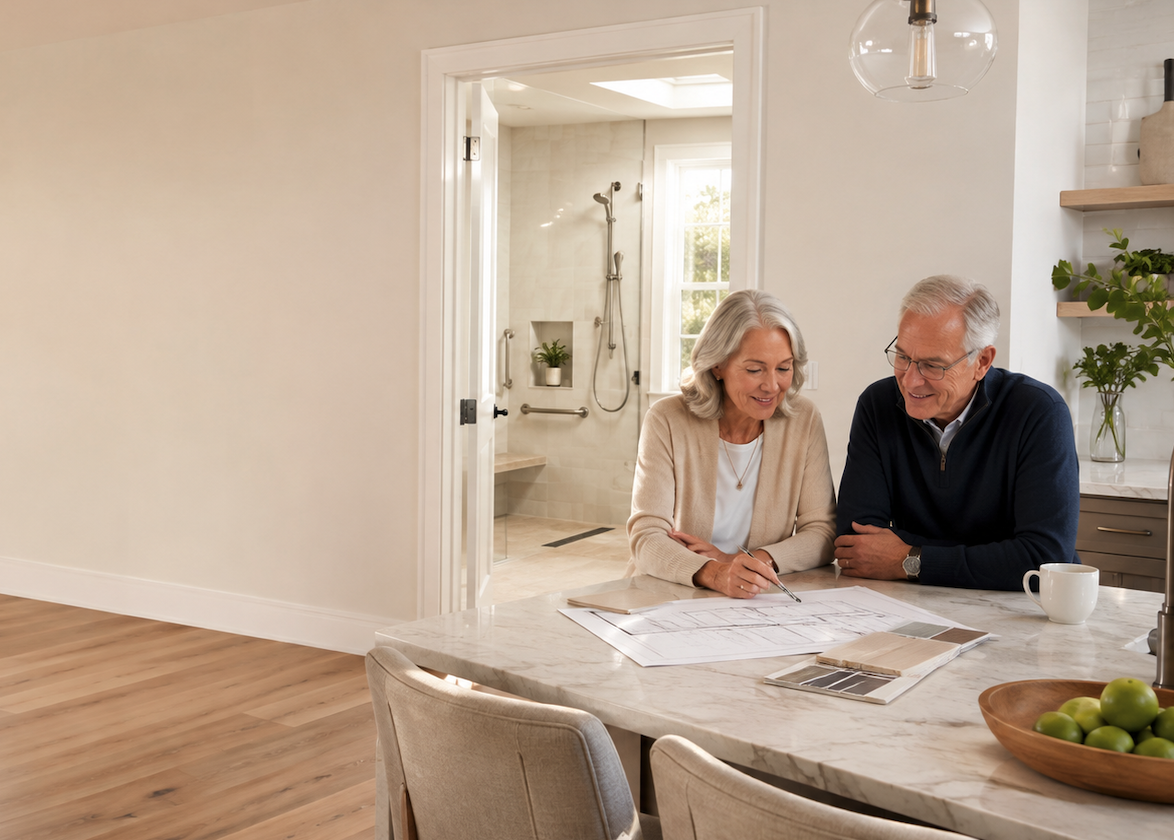
As homeowners think about the future, many are choosing to renovate their homes with aging in place in mind. These improvements are designed to make a home safer, easier to navigate, and more comfortable for people as their mobility needs change over time.
But aging-in-place renovations are not only about staying in your home longer. When thoughtfully planned, they may also make a property more attractive to a wider range of future buyers. From accessible bathrooms to better lighting and step-free entrances, certain upgrades can combine everyday convenience with long-term resale appeal.
What Are Aging-in-Place Renovations?
Aging-in-place renovations are modifications that allow people to continue living safely and independently in their homes as they grow older. Many of these improvements are based on universal design principles, meaning they can benefit people of different ages and physical abilities.
Common upgrades include:
- Step-free entrances
- Walk-in or curbless showers
- Grab bars and bathroom safety features
- Wider doorways and hallways
- Lever-style door handles
- Improved lighting
- Non-slip flooring
- Main-floor bedrooms and bathrooms
- Easy-to-reach storage
- Accessible kitchen layouts
While these features may be particularly valuable to older adults, they can also make everyday life easier for families with young children, people recovering from injuries, and buyers with disabilities or mobility concerns.
Why Aging-in-Place Features May Appeal to Buyers
Homebuyers increasingly look beyond cosmetic finishes when evaluating a property. Functionality, convenience, safety, and the ability to remain in a home for many years can all influence purchasing decisions.
A home that already includes practical accessibility features may stand out because buyers will not have to make those changes themselves.
1. They Can Expand Your Potential Buyer Pool
A conventional home may work well for many buyers, but an accessible home can potentially serve an even broader audience.
Older buyers may appreciate a property that minimizes stairs and provides accessible bathrooms. Multigenerational households may value a main-level bedroom for parents or grandparents. Buyers with mobility limitations may find wider pathways and step-free entry especially desirable.
Even buyers who do not currently need accessibility features may appreciate having a home that can adapt to future changes.
2. Many Improvements Offer Everyday Convenience
Some of the most effective aging-in-place renovations do not look medical or institutional. Instead, they simply make the home easier to use.
For example, lever handles are convenient when someone’s hands are full. Curbless showers can create a sleek, modern appearance while reducing tripping hazards. Better lighting improves both safety and aesthetics, while wider doorways can make rooms feel more open.
When accessibility improvements also enhance comfort and design, they are more likely to appeal to buyers of all ages.
3. Buyers May Value a Home They Can Stay in Longer
Moving can be expensive and disruptive. Some buyers therefore look for homes that can accommodate different stages of life.
A property with a bedroom, bathroom, kitchen, and living space on one level may be particularly attractive because it reduces dependence on stairs. Similarly, entrances without steps can make the home easier to access for decades.
These features can help buyers imagine the property as a long-term home rather than a temporary one.
4. Accessible Bathrooms Can Be a Major Selling Feature
Bathrooms are among the most important areas to consider when planning aging-in-place renovations.
Features such as:
- Walk-in showers
- Built-in shower benches
- Handheld showerheads
- Strategically placed grab bars
- Non-slip flooring
- Comfortable-height toilets
- Easy-to-operate faucets
can improve safety while still fitting into an attractive contemporary bathroom design.
A well-designed accessible bathroom may therefore offer more resale appeal than one that appears highly specialized or clinical.
5. Improved Lighting Can Enhance Both Safety and Presentation
Lighting is another aging-in-place improvement with broad appeal.
Poorly illuminated staircases, hallways, kitchens, and entrances can create unnecessary hazards. Adding brighter fixtures, task lighting, motion-activated lights, and additional switches can make a home safer and easier to navigate.
At the same time, good lighting can make interiors appear more inviting, spacious, and updated when the property is eventually listed for sale.
Which Aging-in-Place Renovations Are Most Resale-Friendly?
Not every accessibility modification will have the same effect on resale value. In general, improvements with universal usefulness and attractive design are more likely to appeal to future buyers.
Consider prioritizing renovations such as:
-> Step-free access: A gently sloped walkway or well-integrated entrance can improve accessibility without detracting from curb appeal.
-> Curbless showers: These can provide accessibility while giving bathrooms a clean, modern appearance.
-> Main-floor living: Having essential rooms on one level can appeal to buyers across multiple generations.
-> Wider doorways: Wider openings can improve wheelchair accessibility while also creating a more spacious feel.
-> Lever handles: These are easier to operate than traditional knobs and can complement modern interiors.
-> Slip-resistant flooring: Attractive flooring with good traction improves safety without making accessibility the obvious focus.
-> Better lighting: Layered lighting can improve safety, functionality, and interior presentation.
Avoid Making the Home Feel Too Specialized
Aging-in-place improvements can support resale appeal, but design matters.
Renovations that make a property feel overly institutional may limit their attractiveness to buyers who do not currently need accessibility features. When possible, accessibility should be incorporated seamlessly into the home’s overall design.
For example, stylish grab bars can coordinate with bathroom fixtures. A shower bench can be incorporated into the tile design. Wider doors can resemble intentional architectural choices rather than specialized modifications.
The goal is often to create a home that feels comfortable and attractive to everyone.
Will Aging-in-Place Renovations Increase Home Value?
There is no guarantee that an aging-in-place renovation will increase a home’s sale price dollar for dollar. Resale value depends on numerous factors, including location, housing-market conditions, renovation quality, buyer demand, and the overall condition of the property.
However, these improvements can increase a home’s marketability.
A property that is easier to access and adaptable to changing needs may attract buyers who would otherwise eliminate less accessible homes from consideration. In some markets—particularly those with large populations of retirees, older adults, or multigenerational households—these features may be especially appealing.
Before undertaking a major renovation specifically for resale purposes, homeowners may benefit from consulting a local real estate professional to understand what buyers in their area value most.
Think About Universal Design Rather Than Age Alone
One of the best approaches to aging-in-place remodeling is to think in terms of universal design.
Universal design focuses on creating spaces that work comfortably for as many people as possible without requiring major adaptation later.
A step-free entrance, for instance, can help an older adult using a walker, a parent pushing a stroller, a delivery worker carrying packages, or someone temporarily using crutches.
When renovations solve problems for a broad range of people, they are more likely to remain useful and desirable when the home changes ownership.
Final Thoughts
Aging-in-place renovations can do more than prepare a home for the future. Thoughtfully designed improvements can enhance safety, convenience, comfort, and accessibility today while potentially increasing the property’s appeal when it is eventually placed on the market.
The key is choosing features that feel integrated rather than specialized. Accessible bathrooms, better lighting, step-free entrances, wider pathways, and flexible main-floor living spaces can benefit homeowners now while helping future buyers see the property as a home that can serve them for years to come.
Ultimately, aging-in-place remodeling is not simply about designing a house for older adults. It is about creating a more adaptable home—and adaptability can be an attractive feature at any age.
leave a comment